
4320 MINUTES WITHOUT COLOR
Moving between photography and narration, Mohammed Nahi traces a period in which sight could no longer be assumed as reliable, and attention shifted toward memory and duration.
February 8, 2026
PICTORIAL STORY
PHOTOGRAPHY Mohammed Nahi
STORY Mohammed Nahi
INTRODUCTION Melanie Meggs
4320 Minutes Without Color is a photographic and written work by Algerian photographer Mohammed Nahi that examines perception at the moment visual certainty begins to falter. Structured around a defined duration, the project does not advance a narrative of loss or recovery. Instead, it maintains attention on a suspended interval, one in which seeing becomes unreliable and experience must be renegotiated in real time.
Developed following a temporary corneal injury, the work marks a deliberate shift in Mohammed’s photographic approach. The camera is no longer employed to stabilize the world or to confirm what is visible. It functions instead as a means of negotiating instability. Images resist clarity, favouring partial focus, tonal ambiguity, and spatial hesitation. These decisions are not stylistic deviations, but methodological ones, aligned with a period in which vision itself could not be assumed.
By removing chromatic information, Mohammed foregrounds the fragility of visual interpretation and the psychological weight carried by contrast, shadow, and proximity. The images hold moments of suspension, where recognition remains unresolved. The accompanying narrative neither explains nor contextualizes the photographs; it extends their internal logic. Time is treated as elastic rather than sequential. While the title asserts numerical precision, the experience described unfolds in durations that expand, contract, and lose coherence.
4320 Minutes Without Color positions photography as a practice of attention when visual certainty withdraws. What follows is Mohammed’s own account — an unfolding of images and words shaped by duration rather than event, written from inside the interval itself, where perception loosens, time shifts, and seeing must be relearned moment by moment.
-min.jpg)
I did not lose my sight abruptly.
There was no single moment to point at, no dramatic fracture. Vision withdrew quietly, almost politely, as if it did not wish to alarm me. At first, I distrusted the experience. I blamed exhaustion, light, dust. But soon, color itself began to hesitate. Reds softened. Blues thinned. The world did not vanish, it became uncertain.
Those 4320 minutes unfolded slowly, pressing their weight into every ordinary gesture.
When sight weakens, the body learns to listen. Footsteps grow louder. Air gains texture. Light is no longer something seen, but something sensed against the skin. I began to move carefully, measuring space with memory rather than confidence. Familiar places lost their authority. Distances stretched unpredictably. Walls appeared where I did not expect them. The certainty I had always assigned to vision dissolved.
Photography entered this moment not as a profession, but as a necessity. I was no longer photographing what I saw. I was photographing what I could not fully trust.
Time, during those days, abandoned its logic. Minutes expanded into long corridors of waiting. Nights felt endless, while days slipped by without form. Appointments, silence, and internal negotiations replaced routine. I became acutely aware of how much our sense of stability depends on uninterrupted sight. When vision falters, identity trembles alongside it.
The camera, once an extension of my eye, became an extension of doubt.
I stopped seeking clarity. Sharpness felt dishonest. Instead, I allowed blur to enter the frame, not as an effect, but as a condition. Shadows grew dominant. Subjects drifted out of focus or escaped the frame entirely. These images were not meant to explain my experience; they were meant to inhabit it.
Black and white emerged naturally, almost inevitably. Color felt excessive, even intrusive. Its absence mirrored my internal state, a world reduced to essentials, stripped of decoration, governed by uncertainty. Contrast became emotional rather than optical. White was not hope. Black was not despair. They coexisted, uneasy and unresolved, just as fear and resilience coexisted within me.
I chose not to photograph portraits. The body appears only indirectly through movement, through traces, through spaces left behind. This absence was deliberate. During those minutes, I did not recognize myself. I existed somewhere between before and after, fragmented and suspended. To show a face would have been false. Instead, I photographed thresholds, corridors, light barely held, figures dissolving into motion. These were not metaphors. They were realities.
What unsettled me most was not the possibility of permanent blindness, but the realization of how unquestioningly I had trusted sight. Vision had always been my authority. Without it, I felt exposed, stripped of certainty, forced into vulnerability. Yet within that vulnerability, something unexpected surfaced: awareness.
I began to notice how the world reveals itself beyond sight. Sound, rhythm, texture, memory all stepped forward. Silence gained weight. Darkness carried information. I learned that seeing is not the same as perceiving, and that perception is never neutral. It is shaped by fear, expectation, and desire.
In this context, photography became an act of resistance.
An insistence on remaining present when presence itself felt fragile.
Each image in 4320 Minutes Without Color functions less as a photograph than as a pause. A hesitation. A question left deliberately open. The work refuses narrative closure because the experience itself offered none. Recovery, when it arrived, was gradual and uncertain. Color did not return triumphantly. It crept back cautiously, as if testing whether it was welcome.
Even after vision stabilized, something remained altered.
I no longer trust clarity the way I once did. Sharp images feel suspicious. Certainty feels temporary.
This project is not solely about loss, but about what emerges in its aftermath: a slower gaze, heightened sensitivity, and a deeper respect for fragility.
The 4320 minutes named in the title are both exact and meaningless. They measure something that cannot truly be quantified. They mark a suspended state, a liminal space where identity, perception, and time loosen their grip. In naming them, I do not seek control over the experience, but acknowledgment of its weight.
This work invites the viewer not to look harder, but to look differently.
To accept discomfort. To remain ambiguous. To recognize that seeing is not an absolute right, but a fragile privilege. The images ask for no sympathy and offer no resolution. They stand as quiet witnesses to a moment when the world slipped out of focus and revealed its most honest form not as it appears, but as it is felt.
4320 Minutes Without Color is a testimony of presence during uncertainty. A visual echo of a body learning how to inhabit the world again. It is not a declaration of strength, but an admission of fragility and within that fragility, a deeper kind of awareness.


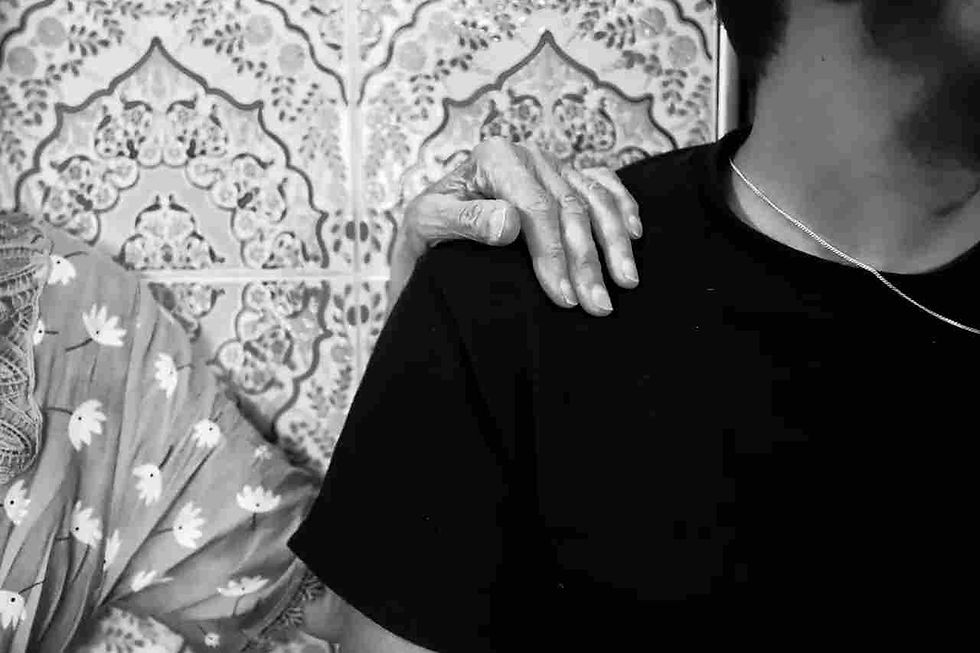
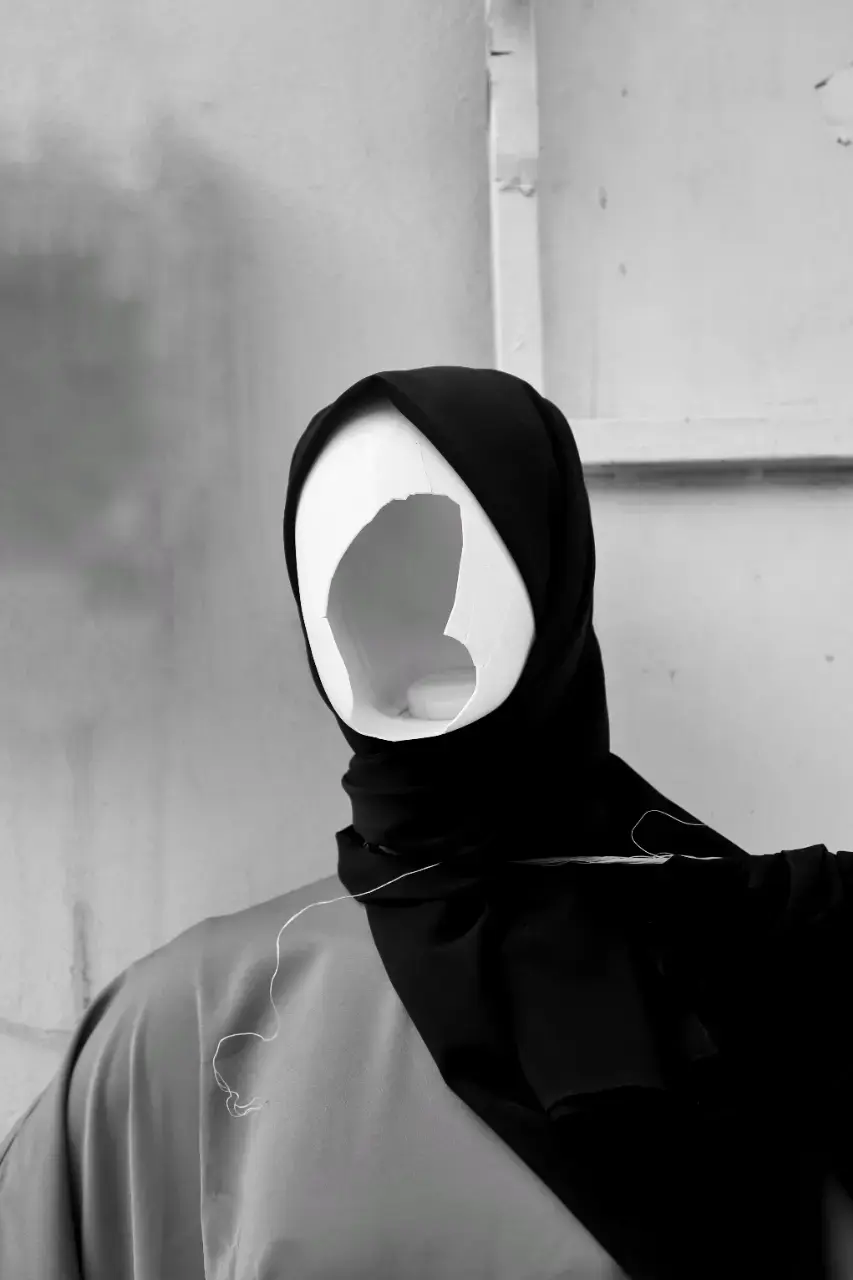


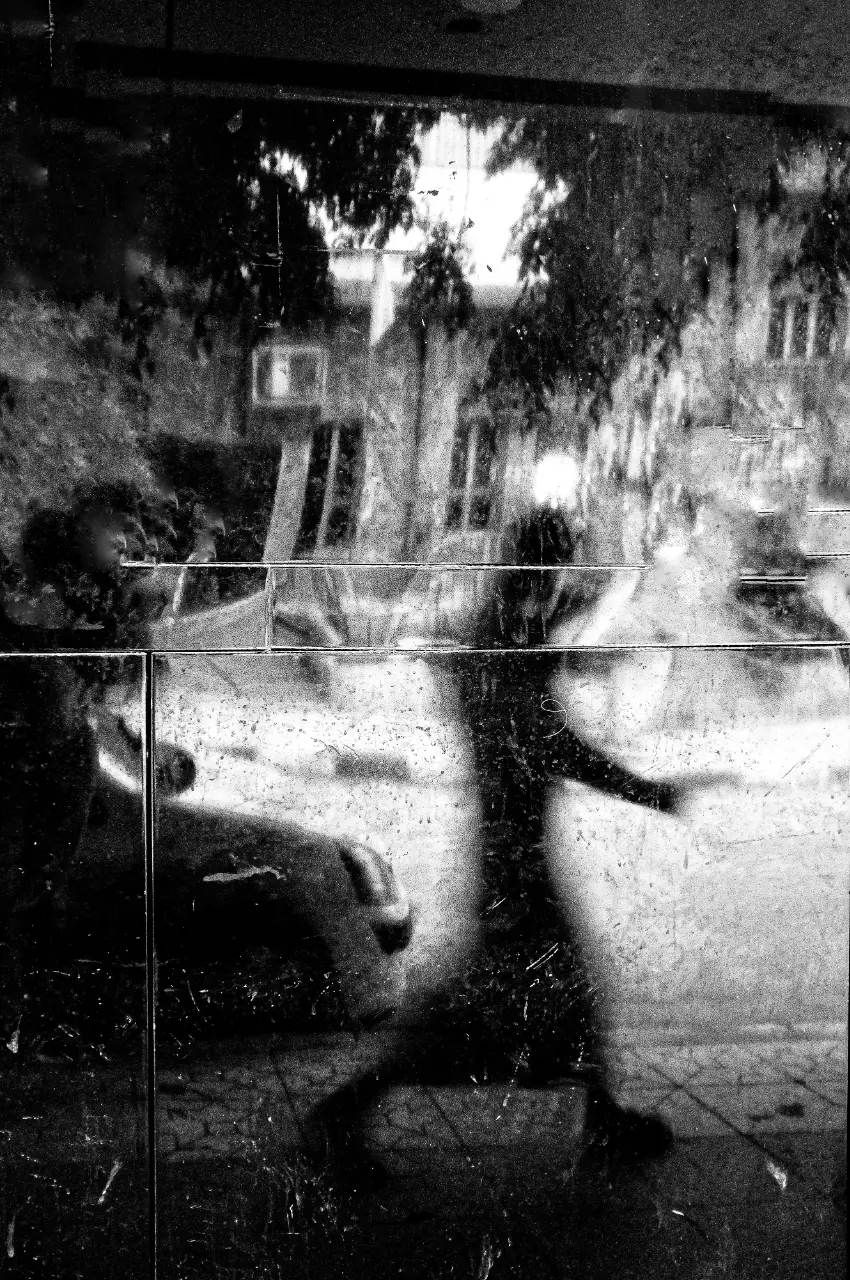

4320 Minutes Without Color leaves us with a sustained awareness of perception as something provisional, shaped by interruption, memory, and adaptation. Mohammed Nahi does not reclaim vision as authority; he approaches it with caution. Clarity is no longer neutral. Sharpness no longer guarantees truth. What lingers is not the absence of color, but the knowledge it produced. A slower gaze. A heightened sensitivity to what is partial, uncertain, and unresolved. In this sense, 4320 Minutes Without Color does not conclude an experience; it marks a shift in how experience is held. It asks the viewer to carry that attentiveness forward, aware that vision is never guaranteed, and that perception, once unsettled, is never entirely restored to innocence.

The views, thoughts, and opinions expressed in the text belong solely to the author/s and are not necessarily shared by The Pictorial List.


